Auto off manual selector switches offer versatile control, enabling both automatic and manual operation of systems. These switches, like HOA types, are crucial for diverse applications.
What are Auto Off Manual Selector Switches?
Auto off manual selector switches are electromechanical components providing users with the flexibility to choose between automated and direct control of a system. Commonly featuring two or three positions – such as Off-Line or Normal-Auto-Standby – they facilitate seamless transitions between operational modes.
These switches maintain contact when needed, making them ideal for applications requiring consistent control. They are essential for systems where both convenience of automation and the precision of manual override are desired, offering a robust and reliable control solution. They often integrate with features like sleep timers.
Applications of these Switches
Auto off manual selector switches find widespread use across numerous industries. In automotive applications, they’re integrated into airbag systems and climate control, offering both automatic and manual operation of features. They are also vital in controlling float switches, often paired with an auxiliary switch like ASC9.7 for automated fluid management.
Furthermore, these switches are crucial in switchboards, particularly with phase sequence indicators, ensuring safe and efficient power distribution. Their versatility extends to various appliances, including televisions with sleep timer functionality, enhancing user convenience and control.
Types of Auto Off Manual Selector Switches
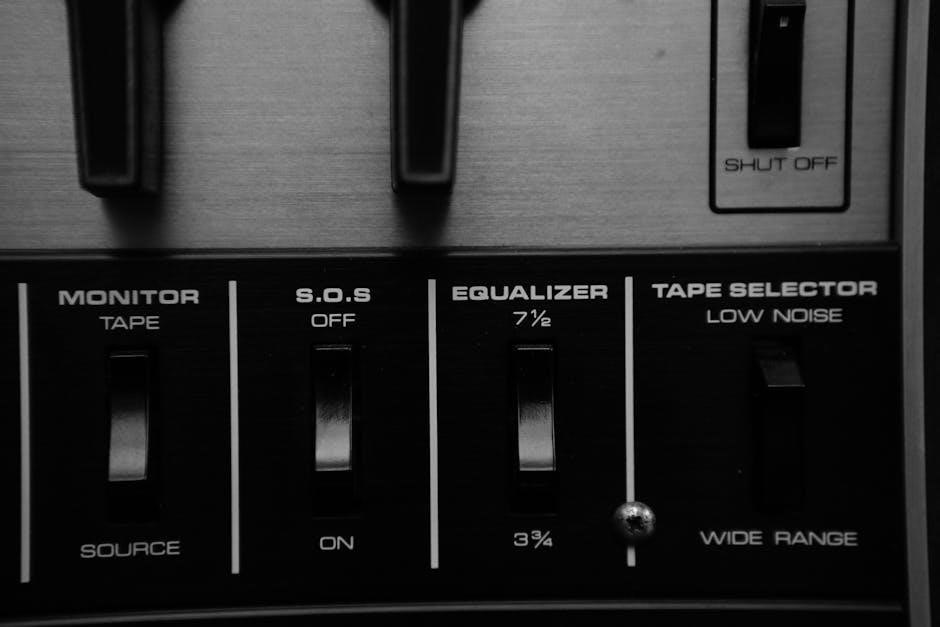
Auto off manual selector switches come in various forms, including Hand-Off-Auto (HOA), Normal-Auto-Standby, and Off-Line (2, 3, or 4-position) configurations, offering diverse control options.
Hand-Off-Auto (HOA) Switches
Hand-Off-Auto (HOA) switches are a prevalent type, providing three distinct operational modes. In the Hand position, complete manual control is enabled, overriding any automatic functions. Selecting Off disables the system entirely, ensuring a secure shutdown. The Auto position allows the system to operate autonomously, utilizing pre-programmed settings or sensor inputs.
These switches are preferred when a maintained contact is needed for reliable operation. They are commonly found in applications requiring a seamless transition between operator control and automated processes, offering flexibility and safety. HOA switches are vital for systems needing both direct intervention and independent functionality.
Three-Position Selector Switches (Normal-Auto-Standby)
Three-position selector switches, often labeled Normal-Auto-Standby, offer refined control over system operation. The Normal position typically represents standard, everyday functionality. Selecting Auto engages automated processes, allowing the system to operate independently based on pre-defined parameters. The Standby position provides a low-power state, maintaining system readiness without full operation.
This configuration is ideal for applications needing a balance between active use, automated efficiency, and energy conservation. The switch enables a smooth transition between modes, ensuring optimal performance and responsiveness. These switches are frequently used in climate control and other automated systems.
Two-Position Selector Switches (Off-Line)
Two-position selector switches, commonly labeled Off-Line, provide a simple yet effective method for controlling power and operation. The Off position completely disconnects the system, ensuring no power consumption or activity. Selecting Line, or On, activates the system, enabling its intended functionality.
These switches are frequently utilized in applications where basic on/off control is sufficient, prioritizing simplicity and reliability. They are often found in older systems or those requiring a straightforward interface. The outgoing circuit cam configuration plays a role in their operation, contributing to the overall AUTO selection process.
Wiring and Connections
Wiring a selector switch involves connecting it with float switches and potentially an auxiliary switch (ASC9.7) for automated control and reliable operation.
Float Switch Wiring with Selector Switch
Float switch wiring, when integrated with an auto-off manual selector switch, provides automated liquid level control. The selector switch, set to AUTO, allows the float switch to independently manage pump activation based on liquid levels. Conversely, setting it to MAN overrides the float switch, enabling direct pump control.
This configuration ensures reliable operation, preventing overflows or dry runs. Proper wiring is essential, connecting the float switch’s common terminal to the selector switch, and the switch’s output to the pump’s power supply. Utilizing an auxiliary switch like ASC9.7 can enhance functionality and safety.
Wiring Diagrams for Common Configurations
Auto-off manual selector switch wiring varies based on application. A typical setup involves a power source connected to the switch, with outputs leading to the controlled device and potentially a float switch. HOA switches require wiring for Hand, Off, and Auto positions, ensuring proper control transitions.
Diagrams illustrate connections for two-position (Off-Line) and three-position (Normal-Auto-Standby) switches. These diagrams detail how to integrate auxiliary switches, like ASC9.7, for added features. Correct wiring guarantees safe and efficient operation, preventing malfunctions and ensuring reliable automatic or manual control.
Auxiliary Switch Integration (ASC9.7)
Integrating an ASC9.7 auxiliary switch with an auto-off manual selector switch enhances functionality. This integration often involves connecting the ASC9.7 to monitor system status and provide feedback to the selector switch. It allows for features like remote control or advanced automation sequences.
The ASC9.7 can be wired to enable or disable automatic operation based on external conditions. Proper integration ensures seamless transitions between manual and automatic modes. Correct wiring is crucial for reliable operation and prevents conflicts between the main selector and the auxiliary switch’s control signals.
Functionality and Operation
Auto off manual selector switches provide AUTO for automated control and MAN for direct user input, offering flexible operation and system management capabilities.
Automatic Operation Mode (AUTO)
Automatic operation, selected via the AUTO position on the switch, allows the system to function independently, responding to pre-programmed parameters or sensor inputs. This mode is ideal for continuous, unattended operation, such as maintaining water levels with a float switch.
In AUTO, the selector switch relinquishes direct control to the system’s internal logic. For example, in automotive climate control, AUTO maintains a set temperature. The system utilizes feedback to adjust settings without manual intervention, ensuring consistent performance and energy efficiency. Proper function requires the switch to be correctly positioned.

Manual Operation Mode (MAN)
Manual operation, engaged by selecting the MAN position on the switch, provides direct user control over the system. This overrides any automatic functions, allowing for immediate adjustments and precise command execution. It’s essential for troubleshooting or when specific, non-automated actions are required.
In MAN mode, the operator directly dictates the system’s behavior. For instance, in automotive applications, manual climate control allows the driver to adjust fan speed and temperature independently. This bypasses automated settings, offering personalized comfort. The MAN setting ensures responsiveness to immediate needs.
Switching Between Modes
Transitioning between AUTO and MAN modes is typically achieved via the selector switch itself. A simple rotation or toggle action alters the operational control. This flexibility is vital for adapting to changing conditions or user preferences. The switch’s design ensures a clear indication of the currently selected mode.
For example, a door-mounted selector switch in automotive systems allows seamless mode changes while driving. The Normal-Auto-Standby switch offers further granularity. Smooth transitions prevent disruptions and maintain system functionality. Proper switch maintenance guarantees reliable mode selection.

Advanced Features
Auto off manual selector switches now include BCD code output, sleep timers, and utilize modern automatic connectors for enhanced functionality and integration.
BCD Code Position Signal Output
Auto off manual selector switches equipped with BCD code position signal output provide a digital representation of the switch’s current position. This functionality, often denoted as DC 220C, allows for seamless integration with programmable logic controllers (PLCs) and other digital control systems. The BCD output enables precise monitoring and control of the selected mode – whether automatic, manual, or off – facilitating advanced automation and feedback mechanisms.
This digital signal enhances system diagnostics and allows for remote monitoring of the switch’s status, improving overall system reliability and control capabilities.
Sleep Timer Integration
Auto off manual selector switches can be effectively integrated with sleep timer functionalities, offering enhanced energy efficiency and user convenience. This feature allows users to pre-set a period after which the connected device will automatically switch off if no input is detected. The auto sleep mode minimizes power consumption and extends the lifespan of the equipment.
This integration is particularly useful in applications like televisions, where a timer can automatically power down the device after a period of inactivity, conserving energy and reducing standby power draw.
Automatic Connectors
Modern auto off manual selector switches are increasingly equipped with the latest generation of automatic connectors. These connectors simplify installation and maintenance, ensuring secure and reliable connections without the need for specialized tools or extensive wiring expertise. This feature significantly reduces assembly time and minimizes the risk of connection errors.
Independent of the switch’s position – AUTO or MAN – these connectors maintain consistent performance. They contribute to the overall robustness and longevity of the switch mechanism, enhancing its usability in various applications.
Safety Considerations
Electrical safety standards are paramount when installing auto off manual selector switches. Proper installation procedures, adhering to regulations, prevent hazards and ensure reliable operation.
Electrical Safety Standards
Auto off manual selector switches must comply with relevant electrical safety standards to prevent hazards. These standards, often dictated by regional regulations, cover aspects like insulation resistance, contact ratings, and flammability. Ensuring proper grounding is critical, alongside utilizing appropriately rated wiring and overcurrent protection devices.
Manufacturers typically provide detailed specifications and certifications demonstrating compliance. Installation should always be performed by qualified personnel, adhering to established electrical codes. Regular inspection for wear and tear, or damage, is also essential for maintaining safety. Ignoring these standards can lead to electrical shock, fire, or equipment malfunction.
Proper Installation Procedures
Proper installation of auto off manual selector switches is paramount for reliable and safe operation. Begin by disconnecting power before commencing any wiring. Carefully follow the manufacturer’s wiring diagrams, ensuring correct terminal connections. Securely mount the switch within its designated enclosure, protecting it from environmental factors.
Verify all connections are tight and insulated to prevent shorts. When integrating with float switches or auxiliary switches (ASC9.7), double-check compatibility and wiring configurations. After installation, thoroughly test the switch’s functionality in both automatic and manual modes before restoring power.
Troubleshooting Common Issues
Switch malfunctions or wiring problems can hinder operation. Inspect connections, test for continuity, and verify power supply. Ensure the selector is correctly positioned;
Switch Malfunctions
Switch malfunctions often present as intermittent operation or a complete failure to switch between automatic and manual modes. A common issue involves contact wear within the switch mechanism itself, leading to unreliable signal transmission. Inspect the switch for physical damage, such as cracks or broken components. Electrical testing with a multimeter can confirm continuity across the switch positions. If the switch fails testing, replacement is typically necessary. Consider the environment; excessive moisture or dust can contribute to internal corrosion and malfunction. Always disconnect power before inspecting or replacing a switch.
Wiring Problems
Wiring problems are frequent causes of auto off manual selector switch failures. Loose connections, corroded terminals, or damaged wiring insulation can disrupt the control circuit. Carefully inspect all wiring associated with the switch, paying close attention to connections at the switch itself and any associated float switches or auxiliary switches (like ASC9.7). Verify proper wire gauge and secure connections. A wiring diagram is essential for accurate troubleshooting. Ensure correct polarity and that wires are not pinched or frayed. Always disconnect power before inspecting or repairing wiring.
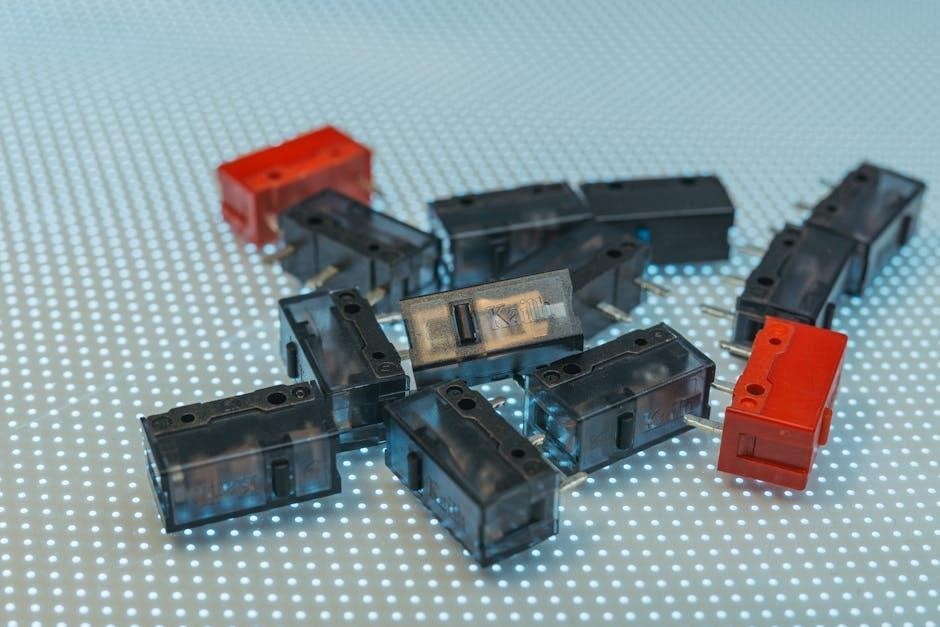
Selector Switches in Automotive Applications
Selector switches integrate into systems like airbag control and climate control, offering both automatic and manual modes for driver preference and safety.
Airbag System Integration
Auto off manual selector switches play a critical, though often unseen, role within modern automotive airbag systems. These switches don’t directly trigger deployment, but contribute to system monitoring and control functionalities. They can be integrated into diagnostic systems, allowing technicians to verify airbag system readiness through manual activation checks during maintenance.
Furthermore, selector switches can be part of systems that temporarily disable passenger airbags under specific conditions – for example, when a child seat is detected. This requires a sophisticated integration with weight sensors and the vehicle’s central control unit, ensuring passenger safety is prioritized. The switch provides a manual override or confirmation element within this automated process.
Climate Control Systems (Automatic & Manual)
Auto off manual selector switches are fundamental components in both automatic and manual climate control systems within vehicles. In automatic modes, the switch allows the driver to engage the system, letting sensors and actuators manage temperature and airflow. Switching to manual mode grants direct control over fan speed, temperature settings, and vent direction.
These switches often feature distinct positions – “Auto,” “Manual,” and “Off” – providing clear operational choices. Integration with sleep timers, as seen in some TV applications, could potentially extend to climate control, offering automatic shut-off to conserve energy when the vehicle is unoccupied.
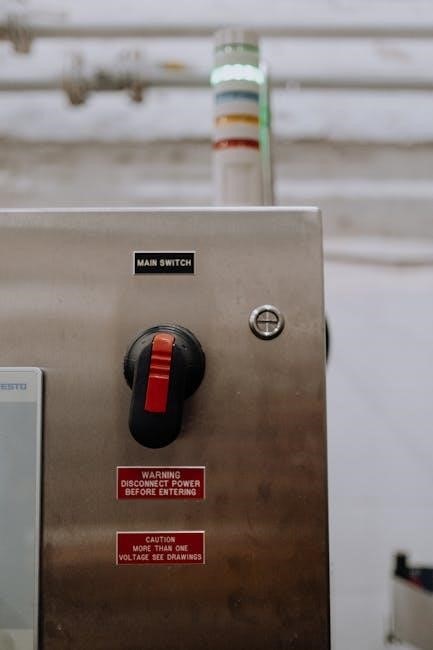
Phase Sequence Indicators and Selector Switches
Phase sequence indicators paired with selector switches enhance switchboard functionality, offering reliable control and monitoring of electrical systems, including auto/manual options.
Use in Switchboards
Auto off manual selector switches are integral components within switchboards, providing critical control over various electrical systems. Their integration allows operators to seamlessly transition between automatic and manual modes, ensuring operational flexibility and safety. These switches, often used alongside phase sequence indicators, enhance monitoring capabilities.
Specifically, they facilitate control of power distribution, motor operation, and other essential functions. The Normal-Auto-Standby configuration is common, offering distinct operational states. Utilizing these switches improves system reliability and simplifies troubleshooting, contributing to efficient switchboard management and overall electrical infrastructure performance.
Indicator Functionality
Auto off manual selector switches often incorporate indicator functionality, providing clear visual cues regarding the current operational mode. These indicators, crucial for switchboard applications, display whether the system is in automatic, manual, or off/standby status. This immediate feedback enhances situational awareness for operators, minimizing errors and improving response times.
Combined with phase sequence indicators, these switches offer a comprehensive overview of system health. The indicators simplify diagnostics and maintenance procedures, allowing for quick identification of potential issues. Clear indication of the selected mode is vital for safe and efficient operation of complex electrical systems, preventing accidental activation or deactivation.

Market Trends and Availability
Auto off manual selector switches are increasingly common in modern vehicles, featured in systems like airbag control and climate control, with providers like AAA Auto offering options.
Current Automotive Models Featuring these Switches
Determining precise current models consistently utilizing auto off manual selector switches proves challenging, as availability fluctuates. Recent data suggests around 22 models offered these features a couple of years ago, decreasing to under 20 last year.
Currently, the number of new cars under 400,000 CZK (Czech Koruna) equipped with these switches is nearing a mere one. These switches are integrated into features like heated steering wheels, lane keeping assist, parking assist, and automatic climate control systems, enhancing driver convenience and safety.
AAA Auto and Similar Providers
AAA Auto (www.aaaauto.cz) represents a key automotive provider in the Czech Republic, and similar dealerships increasingly feature vehicles incorporating auto off manual selector switches. These switches are often highlighted within vehicle specifications relating to comfort and safety features.
Providers like AAA Auto showcase cars with systems utilizing these switches for functionalities like climate control (automatic & manual modes), airbag systems, and various driver-assistance technologies. Examining their online inventories reveals a growing trend towards including these switches as standard or optional equipment.